AI fashion assistants are often presented as a flashy retail feature, but their real business value is much more practical. They help shoppers move from vague interest to confident selection by combining recommendation, search, fit guidance, styling support, and post-purchase learning in one flow.
The main problem AI fashion assistants solve is decision friction
Most online shoppers do not struggle because there are too few products. They struggle because they do not know which product suits their body, occasion, taste, or wardrobe. A useful AI fashion assistant turns that uncertainty into a series of answerable decisions.
In practice, strong systems usually combine four layers:
| Layer | Main role | Business effect |
|---|---|---|
| Personalized recommendation | Matches products to preference history and behavior | Better click-through and conversion |
| Conversational search | Lets users ask for products in natural language | Faster product discovery |
| Virtual try-on or outfit preview | Reduces hesitation about style and fit | Lower return risk |
| Feedback learning | Improves future suggestions based on outcomes | Better repeat purchase performance |
The original source material points to potential conversion gains of 15-25% and customer lifetime value growth of 18-30% when deployment is mature. The exact result varies by brand, but the pattern is clear: the closer the AI assistant gets to real buying decisions, the more commercial value it can create.
Recommendation quality depends more on product data than on model hype
Fashion recommendation is only as good as the product information behind it. Apparel decisions depend on combinations of style, fabric, silhouette, occasion, and fit logic, not on one field alone.
If a catalog only contains a product title and a few photos, the assistant will sound clever but remain shallow. Recommendation quality improves when the product layer includes:
- Fabric composition, weight, and tactile descriptors
- Fit and silhouette information such as slim, relaxed, cropped, or structured
- Use-case tags such as office, resort, travel, or recovery
- Sizing deviations, wash behavior, and return feedback
- Cross-sell relationships with bottoms, outerwear, or accessories
This matters for mills and fabric suppliers too. As apparel brands adopt AI fashion assistants, the upstream expectation shifts. Fabric information increasingly needs to be clear enough for both humans and systems to interpret quickly.
Virtual try-on is valuable, but it should be used with realistic expectations
Virtual try-on helps because it lowers uncertainty before purchase. It is especially relevant for dresses, jackets, activewear, and close-to-body items where shoppers want more confidence before ordering.
Still, brands should position it accurately:
- It works best for silhouette, styling, and first-impression guidance
- It does not fully replace hand feel or real drape judgment
- It can support fit confidence, but only when size data is kept accurate
- It remains limited for highly elastic, reflective, transparent, or complex fabrics
So virtual try-on should be treated as a friction-reduction tool, not as a perfect replacement for physical trial.
Multimodal interaction makes shopping easier for users and harder for operators
More AI fashion assistants now combine text, voice, image upload, and visual matching. A shopper can upload a street-style image and ask for similar pieces, or show one garment and ask what footwear would balance it.
That feels natural to shoppers, but it raises the operational bar for brands:
- Image recognition and catalog tagging need shared logic.
- Conversations should feed back into customer profiles instead of disappearing after one session.
- Service, recommendation, and marketing systems need to share context.
- Brands need to manage the gap between rendered results and real product outcomes.
Without this foundation, the assistant may look intelligent at first but feel unreliable after repeated use.
For brands and suppliers, the bigger impact is coordination speed
Many teams frame AI fashion assistants as a front-end retail tool, but the downstream effect is operational. If the assistant starts surfacing certain colors, textures, or functional claims more effectively, suppliers need to respond faster with clear options and accurate support materials.
That makes a few capabilities more important:
- Better fabric data organization and retrieval
- Cleaner sample labeling and substitute-fabric logic
- Faster feedback loops between sales, development, and sampling
- More reliable inventory and lead-time visibility
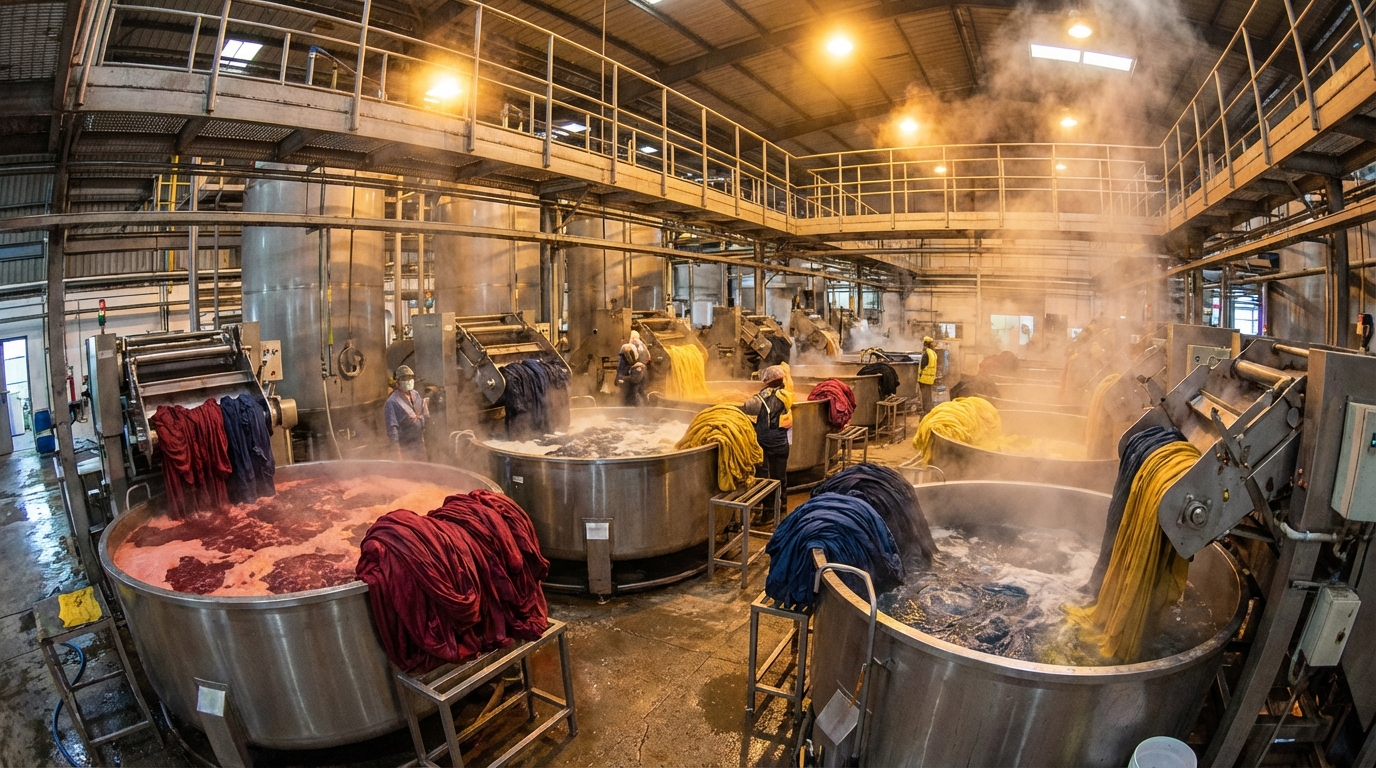
If your team is already tightening execution on product consistency, our article on dyeing quality control and colorfastness is a useful companion because AI-led selling only works when the bulk product stays aligned with the promise.
Not every brand needs the same AI assistant on day one
The strongest rollout path is usually phased rather than all at once:
| Stage | Best starting point | Goal |
|---|---|---|
| Early stage | Search enhancement and recommendation tuning | Better discovery efficiency |
| Growth stage | Styling suggestions and fit support | Higher conversion and basket value |
| Mature stage | Virtual try-on and omnichannel profile memory | Lower returns and better retention |
Two risks should be managed from the start. The first is privacy, especially when body-related data, photos, or personal preference histories are involved. The second is brand consistency. If the assistant produces advice that feels generic or off-brand, it weakens trust instead of building it.