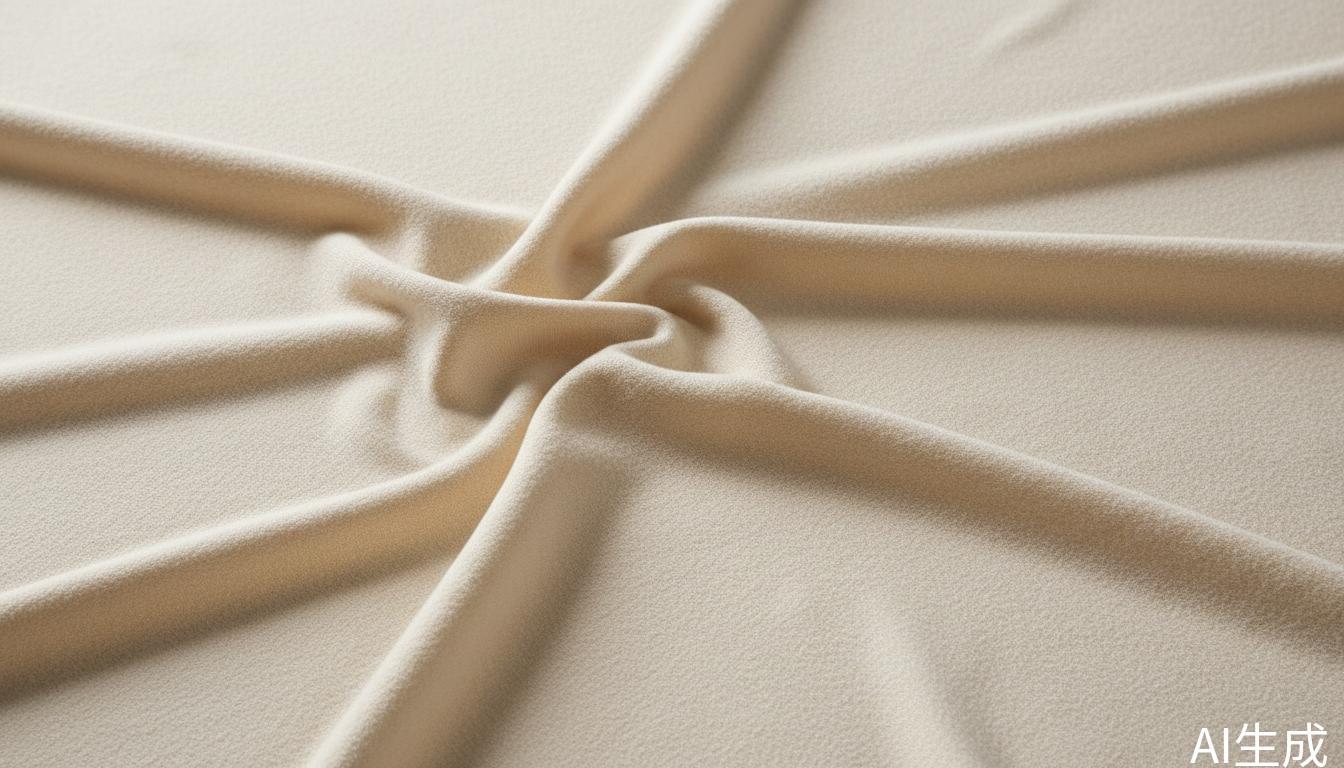
Knit vs Woven Fabric: How Buyers Tell Them Apart and When to Choose Each
Why Knit vs Woven Is the First Question in Fabric Sourcing
Construction determines stretch, drape, shrinkage, seam type, and care labeling before any aesthetic decision is made. Misidentifying construction is a common cause of failed lab dips, wrong seam specs, and rework at sampling. This guide shows you how to tell knit vs woven fabric with a fast physical identification method, plus a selection framework for end use.
When you receive a sample or tech pack, the first thing to confirm is whether the fabric is knit or woven. This single decision cascades through your entire sourcing process: it dictates the seam type (overlock vs. lockstitch), the needle and thread choice, the shrinkage allowance, and even the care label instructions. Get it wrong, and you risk lab dip failures, seam slippage, or a garment that simply doesn’t behave as expected in wear testing.
For sourcing managers and fabric developers, the ability to identify construction in under a minute saves weeks of back-and-forth. This article provides four field tests you can run on any sample, a side-by-side comparison of how knits and wovens behave, and a checklist for specifying each in an RFQ. By the end, you’ll know exactly what to write when you issue that next inquiry.
The Structural Difference: Loops vs Interlaced Yarns
Knit fabric is formed by interlocking loops of yarn; woven fabric is formed by interlacing warp and weft yarns at right angles. Knit structures divide into weft knits (jersey, rib, interlock, terry, fleece) and warp knits (tricot, raschel). Weft knits cover most apparel; warp knits suit lingerie, lining, and mesh. Woven fabric has no inherent loop stretch, so stretch must come from yarn (spandex) or weave structure.
Think of a knit as a series of interconnected loops, like a chain-link fence but with yarn. Each loop passes through the loop below it, creating a flexible, stretchable structure. This is why a simple jersey knit can stretch noticeably crosswise without elastane. Woven fabric, by contrast, is like a basket weave: warp yarns (lengthwise) and weft yarns (crosswise) interlace at 90-degree angles. There are no loops to elongate, so the fabric resists stretch unless the yarns themselves contain spandex or the weave is engineered for mechanical stretch (e.g., ripstop or twill with high twist yarns).
Within knits, the distinction between weft and warp matters for sourcing. Weft knits are made on circular machines and are the workhorses of apparel: t-shirts, polos, hoodies, activewear. Warp knits are made on flat machines and produce fabrics like tricot and raschel, which are common in lingerie, lining, and mesh. For a deeper dive into these classifications, see our guide to knit fabric basics: weft and warp classification.
Four Field Tests to Tell Knit From Woven in Under a Minute
Stretch test: pull the sample on the crosswise and lengthwise grain — knits stretch noticeably, wovens resist unless elastane is present. Edge fray test: cut a raw edge — woven fabric unravels into straight yarns, knit fabric curls and sheds loops rather than clean yarns. Loop inspection: use a magnifier or phone macro lens — knits show V-shaped or interlocking loops, wovens show a grid of over-under yarns. Light and drape test: hold against light and drape over the hand — knits are typically more opaque per weight and fall in soft folds; wovens hold crisper shape.
These tests require no equipment beyond your hands and a phone. Start with the stretch test: grasp the fabric with both hands about 10 cm apart and pull gently. A jersey knit will give easily; a plain-weave cotton will barely move. Next, cut a small notch on the edge. If it frays into individual yarns that you can pull out one by one, it’s woven. If it curls and the edge shows tiny loops, it’s knit. For confirmation, use your phone’s macro lens to inspect the surface. Knits show a series of V-shaped loops (in jersey) or interlocking loops (in rib). Wovens show a clear over-under grid. Finally, hold the fabric up to a light source. Knits tend to be more opaque for their weight because the loops pack densely; wovens may show light through the gaps between yarns, especially in loose weaves.
Knit vs Woven: Side-by-Side Comparison for Buyers
Use the table below to compare the decision dimensions that matter most in sourcing. Knit apparel fabrics commonly run 180–360 GSM, while wovens vary widely by end use.
| Dimension | Knit | Woven |
|---|---|---|
| Structure | Interlocking loops | Interlaced warp and weft yarns |
| Stretch & recovery | Inherent stretch (noticeable crosswise give for jersey); recovers well with spandex | Minimal stretch unless elastane added or mechanical stretch weave |
| Edge fraying | Curls, sheds loops; does not fray into straight yarns | Frays into individual warp/weft yarns |
| Drape | Soft, fluid, conforms to body | Crisp, holds shape, can be stiff |
| Shrinkage behavior | Can shrink unless pre-shrunk; cotton knits prone to torque | Generally lower shrinkage but depends on weave and finish |
| Seam stability | Requires overlock or coverstitch; seams stretch with fabric | Lockstitch or chainstitch; seams can pucker if tension wrong |
| Typical weight band | 180–360 GSM for apparel | Varies widely by end use |
| Common end uses | T-shirts, polos, hoodies, activewear, loungewear, rib trims | Shirting, denim, tailored jackets, outerwear shells, lining |
| RFQ specification fields | Composition, GSM, stretch direction, finish, shrinkage tolerance, colorfastness | Yarn count, weave structure, width, finish, shrinkage tolerance |
When writing an RFQ, the specification fields differ. For knits, you’ll specify composition (e.g., 100% combed cotton, 60/40 cotton-poly, 85/15 cotton-spandex), GSM within the 180–360 GSM band, stretch direction (crosswise, lengthwise, or 2-way), finish (e.g., peached, brushed, moisture-wicking), and shrinkage tolerance. For wovens, you’ll specify yarn count (e.g., 40s x 40s), weave structure (plain, twill, satin), width, finish, and shrinkage tolerance. For a detailed breakdown of knit types and their applications, see our knit fabric types guide.
When to Choose Knit: End Uses and Specification Checklist
Choose knit when the garment needs stretch, recovery, soft hand, or body-conforming fit — t-shirts, polos, hoodies, activewear, loungewear, rib trims. Specify composition (e.g. 100% combed cotton, 60/40 cotton-poly, 85/15 cotton-spandex), GSM within the 180–360 GSM band, stretch direction, and finish. Confirm shrinkage tolerance, colorfastness, and pilling expectations before bulk. For factory-direct knit sourcing from Guangzhou, yxxfabric.com runs sampling at 15–30 days and bulk at 35–45 days, with MOQ of 500 kg per color and 2,000 kg per order.
Knit fabrics excel where comfort and movement are priorities. If your design brief calls for a soft hand, easy drape, or the ability to move with the wearer, knit is likely the right choice. Common categories include basics (t-shirts, tanks), mid-layers (hoodies, sweatshirts), performance wear (activewear, base layers), and trims (rib collars, cuffs). When specifying, be explicit about stretch direction: crosswise stretch is standard for jersey, but 2-way stretch (crosswise and lengthwise) may be needed for athletic wear. Also consider the finish: a peached finish gives a soft, sueded hand, while a moisture-wicking finish adds function.
Before committing to bulk, request a sample and test for shrinkage, colorfastness, and pilling. For a comprehensive selection framework by garment category, see our guide to knit fabric selection by garment category.
When to Choose Woven, and How to Write the RFQ
Choose woven when the garment needs structure, crisp drape, abrasion resistance, or minimal stretch — shirting, denim, tailored jackets, outerwear shells, lining. Woven RFQs should specify yarn count, weave structure, width, finish, and shrinkage tolerance. If a design calls for both, plan separate suppliers or a supplier with both capabilities and align color approval across both. For knit programs, yxxfabric.com holds OEKO-TEX Standard 100 and ISO 9001, runs a 5-step QC from yarn inspection to final fabric inspection at AQL 2.5, and has served 200+ global brands.
Wovens are the choice when the garment must hold its shape, resist abrasion, or provide wind and water resistance. Shirting, denim, chinos, tailored jackets, and outerwear shells are classic woven applications. When writing an RFQ for woven fabric, include yarn count (e.g., 40s x 40s), weave structure (plain, twill, satin), width (usually 44/45” or 58/60”), finish (e.g., mercerized, washed, water-repellent), and shrinkage tolerance. If your collection includes both knits and wovens, you may need to split sourcing between two suppliers or find a mill with both capabilities. In either case, align color approvals across both substrates to avoid mismatches.
For knit programs, yxxfabric.com offers factory-direct sourcing with in-house knitting, dyeing, and finishing. Our certifications include OEKO-TEX Standard 100 and ISO 9001, and we run a 5-step QC process from yarn inspection to final fabric inspection at AQL 2.5. With 15 years of experience, a 30,000 m² factory, 200+ circular knitting machines, and monthly capacity of 1,000 tons, we serve 200+ global brands.
References
- Knit Fabric Types Guide for Apparel Sourcing
- Knit Fabric Basics: Weft and Warp Classification
- Knit Fabric Selection by Garment Category
- 3 Ways to Differentiate Knitted and Woven Fabrics | EYSAN FABRICS Ready to source knit fabric with confidence? Contact us to request samples or a quote for your next program.