Yarn Count, Filament vs Staple: How Yarn Specs Change Knit Fabric Hand, Cost and Pilling
Yarn count is the number that defines a yarn’s thickness, but it is expressed on two different systems: staple yarns use length-per-weight (Ne, English cotton count) where a higher number means finer yarn, while filament yarns use weight-per-length (denier, D) where a lower number means finer yarn. This is the core of yarn count filament vs staple yarn in knit fabric: the two systems run in opposite directions, so a 30s cotton and a 30D polyester are not comparable numbers. Filament yarn is smooth, bright and strong with almost no free fibre ends, so it resists pilling; staple yarn is matte, rough and hairy, which gives cotton jersey its natural hand but makes it pill more. For a buyer, the practical rule is simple: never swap an Ne number for a D number on a tech pack, and always pair the yarn spec with a pilling test method and a minimum rating.
What Yarn Count Actually Tells You (and Why Filament and Staple Count Differently)
Every yarn — filament or staple — needs a count number to define its specification; without it, the spec is incomplete. The trap is that the two count systems run in opposite directions, so a ”30s” cotton and a “30D” polyester are not comparable numbers and must never be swapped one-for-one on a tech pack.
Staple yarn is made from short fibres measured in centimetres or inches. Almost all natural fibres are staple — cotton, linen and wool — with silk the exception as a natural filament. Staple count is a length-per-weight number: Ne (English cotton count) tells you how many 840-yard hanks make one pound, so a higher Ne means a finer yarn. A 40s combed cotton is finer than a 20s.
Filament yarn is made from long fibres that can be drawn to indefinite length and are usually measured in metres or longer units. Filament is typically man-made, though silk reeled from the cocoon is a natural filament. Filament count is a weight-per-length number: denier (D) is the weight in grams of 9,000 metres of yarn, so a lower D means a finer yarn. A 50D filament is finer than a 150D.
When you read a spec, first identify the system. If the number is followed by “s” or “Ne”, it is staple and finer means higher. If it is followed by “D” or “denier”, it is filament and finer means lower. Getting this backwards is one of the most common causes of a sample that feels nothing like the reference.
Filament vs Staple: How the Fibre Length Changes Fabric Hand
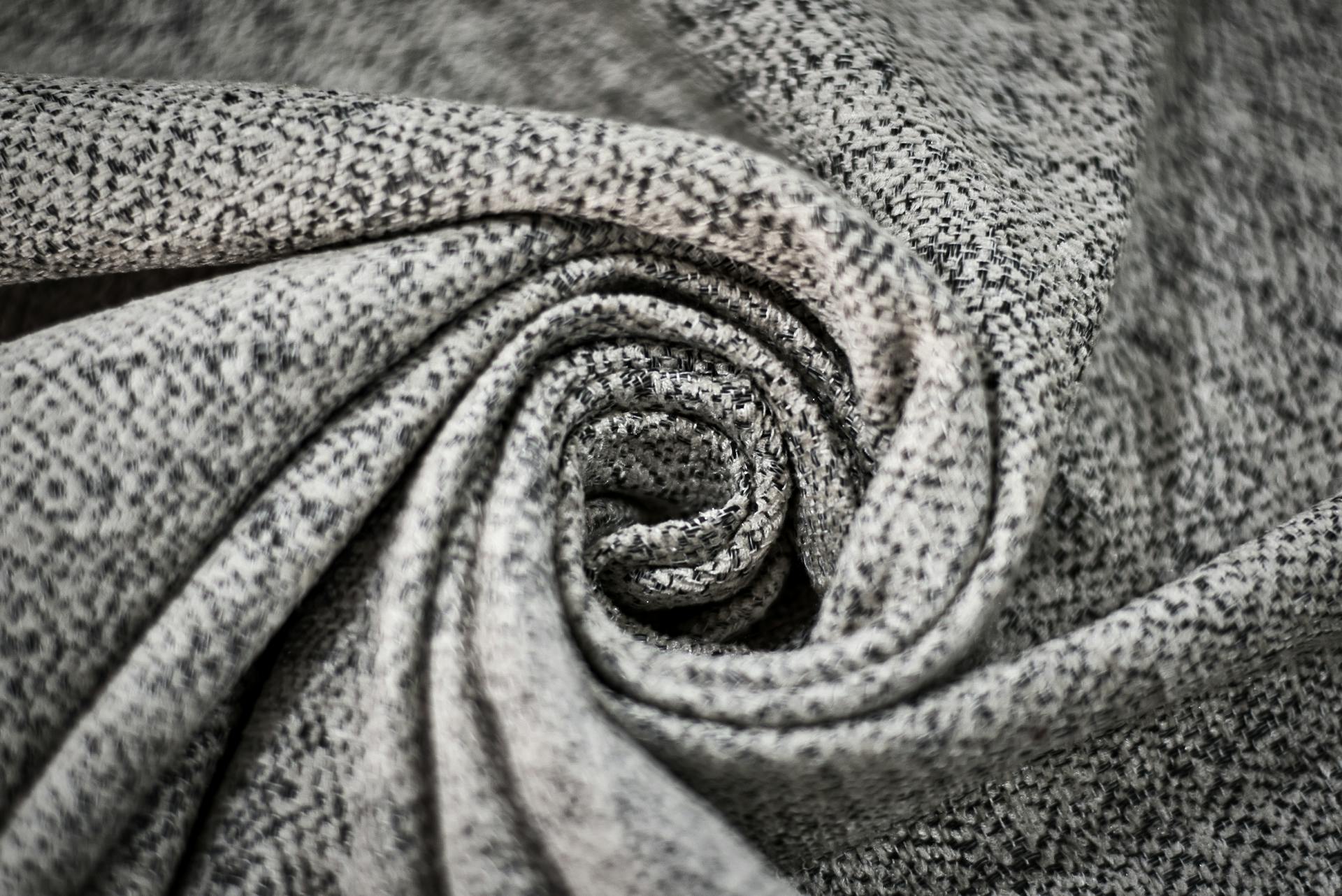
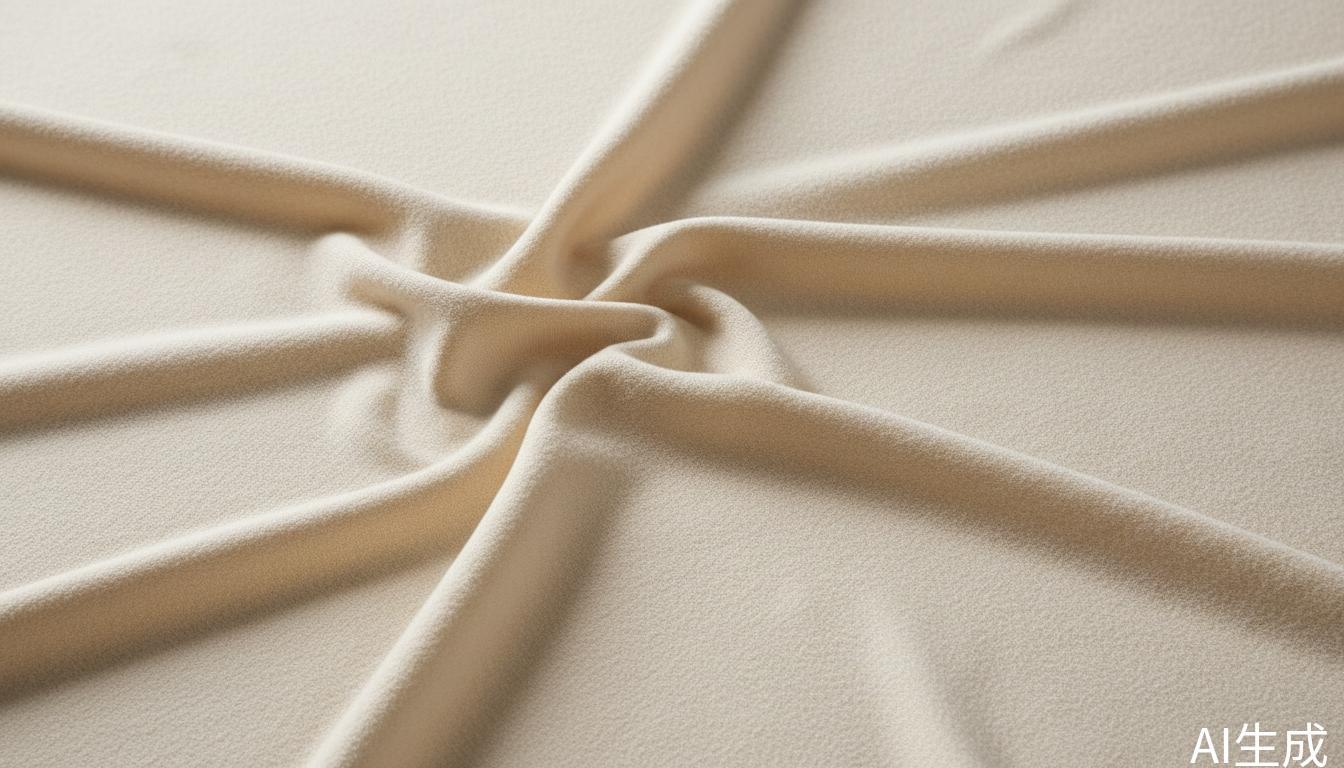
The single biggest driver of hand feel is fibre length, not fabric weight. Staple yarn reads semi-dull to dull, rough, with protruding fibre ends — this hairiness is exactly what gives cotton jersey its dry, natural, matte hand. Filament yarn reads bright, smooth and strong, producing a slick, cool, slightly lustrous surface typical of performance and lining knits.
A filament yarn does not have to be made of many fibres twisted together — a single thicker filament can serve as the yarn. That is why fine-denier filament knits can feel almost film-like: there is no fibre bulk to create softness, only a continuous smooth surface.
Man-made filament can also be cut into staple fibre — staple polyester and staple acrylic are common — which keeps the synthetic’s performance while giving the natural hairy look and hand of a staple yarn. This cut-staple route is how a mill gets a cotton-like surface without using cotton.
The practical effect for a buyer: switching a jersey from combed cotton staple to filament polyester changes drape, surface sheen and perceived quality even at identical GSM. If your reference sample is a matte cotton hand, a filament substitution will read cheaper and shinier no matter how you adjust the weight.
| Attribute | Staple yarn | Filament yarn |
|---|---|---|
| Count system | Ne / English cotton count (length per weight) | Denier / D (weight per length) |
| Finer yarn means | Higher number (40s finer than 20s) | Lower number (50D finer than 150D) |
| Fibre length | Centimetres or inches | Metres or longer, drawable to indefinite length |
| Surface and hand | Semi-dull to dull, rough, hairy | Bright, smooth, strong |
| Free fibre ends | Many — the raw material for pills | Almost none |
| Pilling tendency | Higher | Lower |
| Typical knit end uses | T-shirts, jersey, fleece, brushed knits | Activewear, cooling knits, linings |
| Relative cost position | Higher at fine combed counts | Generally lower; cut-staple adds a step |
Why Staple Yarn Pills and Filament Yarn Mostly Doesn’t
Pilling is a common defect in knit fabrics, and it is driven by loose fibre ends migrating to the surface and tangling into small balls. Staple yarn is built from short fibres with free ends — the raw material for pills — so hairier, softer-spun staple pills more readily. Filament yarn has continuous fibres with no free ends, so it has far less material available to form pills.
This is why a filament-based activewear knit can survive repeated abrasion with almost no surface change, while a soft-spun cotton jersey may show pilling after only moderate wear. The fibre length is doing the work, not the fabric weight.
Pilling is tested by Martindale, ICI Pilling Box or Random Tumble, all using a 1–5 rating scale. Always write both the method and a minimum rating (for example ≥3.5) into the purchase order — a rating without a method is not a spec, because the three methods stress the fabric differently and will not give the same number. For a deeper walkthrough of method selection and rating thresholds, see our anti-pilling knit fabric guide.
Yarn count also interacts with pilling. Finer, longer-staple, better-combed cotton resists pilling better than coarse short-staple cotton at the same fabric weight, because combing removes the short fibres that would otherwise work loose. If you are specifying a soft cotton hand and a pilling minimum at the same time, the count and the combing grade are your two levers.
The Cost Side: Where Yarn Spec Drives Fabric Price
Filament yarn generally runs through fewer spinning steps than staple, which is one reason filament-based knits can sit at a lower relative cost position. Fine-count combed staple cotton costs more than coarse counts because more fibre preparation and combing is required to reach the same cleanliness and length uniformity.
Cutting filament into staple adds a processing step, so staple polyester usually costs more than the filament it was made from. That extra step buys you the natural hairy look and hand, and it is a real cost line, not a rounding error.
Yarn choice also changes knitting efficiency and dyeing behaviour, which feeds back into the mill’s quoted price per kg. A filament yarn runs cleaner through the needles and takes dye more uniformly; a hairy staple yarn can shed fibre, need more frequent cleaning, and dye with more surface variation. Those effects show up in the quote even when the GSM and composition look identical on paper.
Because we do not publish prices, treat cost as a relative position rather than a number. The right move is to define the yarn spec precisely — fibre type, count with its system, pilling method and rating — and then request a quotation against that defined spec so every mill is quoting the same thing. Comparing quotes built on different yarn systems is not a real comparison.
Specifying Yarn Count and Fibre Type by End Use
Match the yarn to the end use first, then set the count. For a T-shirt or basic jersey, combed cotton staple gives the matte hand buyers expect, and you should plan a pilling spec because staple pills. For activewear and cooling knits, filament — often fine denier — delivers the smooth, strong, low-pill surface the category needs. For fleece and brushed knits, staple or cut-staple yarn is often preferred because brushing needs fibre ends to raise a pile. For rib and stretch knits, yarn count must be balanced against elastane content so the rib recovers without grin-through.
Write the spec on the PO as three linked items: fibre type + yarn count with its system (Ne or D) + pilling method and minimum rating. For example: “100% combed cotton, 30s Ne, Martindale ≥3.5.” That single line removes most of the ambiguity that causes sample rejections.
If you are still choosing a weight, our fabric GSM guide explains how weight and yarn count interact, and the cotton jersey fabric guide covers the staple-cotton side in detail.
At yxxfabric.com we run 200+ circular knitting machines with in-house dyeing and finishing across three plants, 1,000 tons monthly capacity, MOQ 500 kg per colour and 2,000 kg per order, sampling 15–30 days and bulk 35–45 days. That means a yarn spec change can be trialled at sample stage before you commit to bulk.
How to Check a Yarn Spec Before You Approve Bulk
Confirm the count system on the tech pack first — Ne and D are not interchangeable, and a missing system letter is a red flag. Then ask for the pilling test method and rating, not just a pass/fail statement, because a pass against an unstated method tells you nothing. If the yarn spec is critical to hand or performance, verify fibre content independently rather than relying on the mill’s description alone.
Request the yarn spec alongside the GSM and composition so the three are consistent. A 180–220 GSM jersey in 100% combed cotton is a coherent spec; the same weight described as filament polyester with a cotton hand is not, and the inconsistency usually signals a copy-paste error somewhere in the chain.
At yxxfabric.com we apply 5-step QC from yarn inspection to final fabric inspection at AQL 2.5, and hold OEKO-TEX Standard 100 and ISO 9001 certification. Yarn inspection is the first step precisely because a wrong count or fibre type cannot be corrected downstream.
References
- What are filament and staple fibres? What is yarn count? — EYSAN FABRICS
- Fabric Pilling Test: Methods, Ratings & Spec Requirements — yxxfabric.com
- Knit Fabric Basics: Weft and Warp Classification — yxxfabric.com
- Cotton Jersey Fabric Guide — yxxfabric.com
- Fabric GSM Guide: Weight Selection — yxxfabric.com Send us your yarn spec — fibre type, count with its system, and pilling requirement — and we will confirm feasibility and sampling. Request a sample or a quotation against your defined spec and we will respond with lead times and terms.