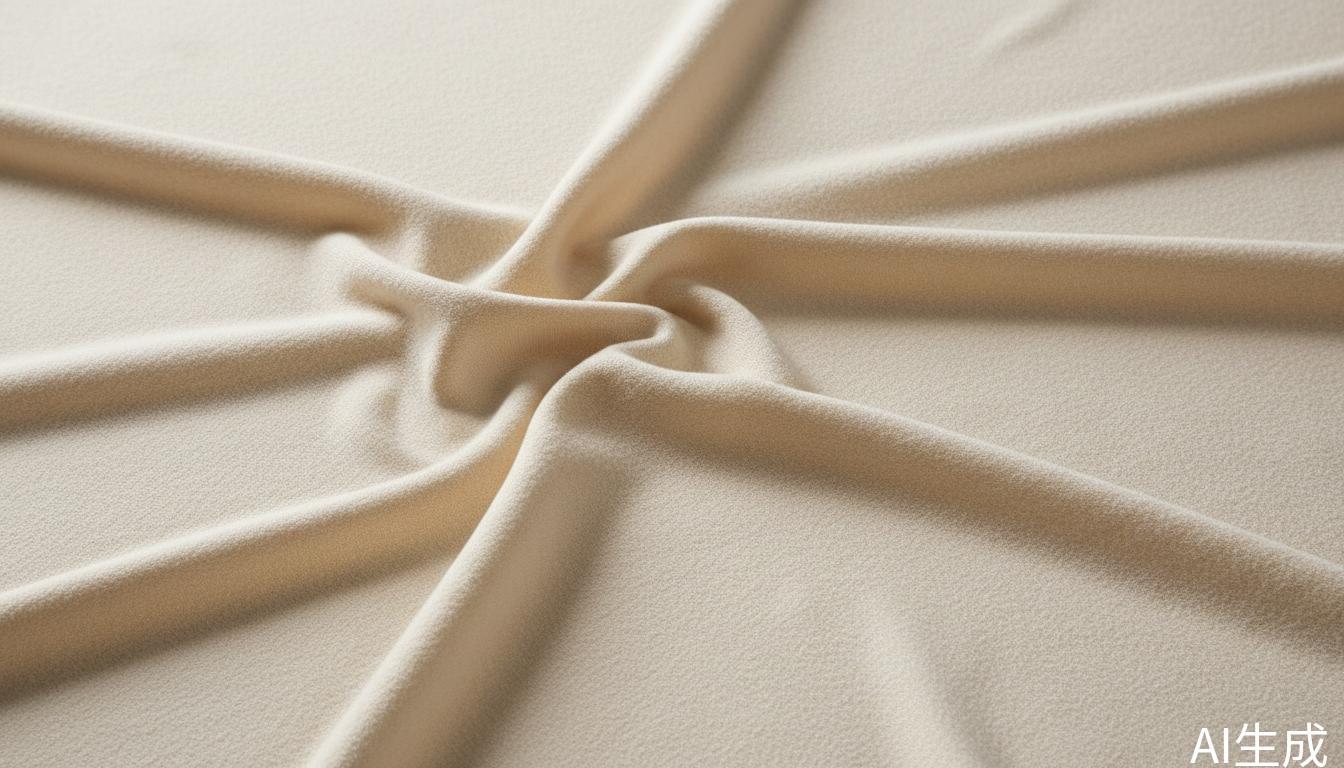
Fabric Sourcing Guide for Apparel Brands: How to Choose Knit Suppliers
This fabric sourcing guide for apparel brands explains how to choose suppliers: define your fabric spec first, then shortlist by supplier type, verify credentials and factory evidence, qualify with objective sample testing, and confirm commercial terms before any bulk commitment. This playbook gives you a repeatable six-step process so you compare factories on the same criteria instead of by price or gut feel.
Step 1: Define the Fabric Before You Define the Supplier
The conclusion: write a one-page fabric spec sheet before you contact any supplier, because vague briefs produce quotes you cannot compare. Start with knit vs. woven. Knit fabrics are typically used for sportswear, underwear and sleepwear, while woven fabrics suit fashion, outdoor, shirting and uniforms — the garment design determines which you source. Lock the fiber composition next: natural (cotton, wool, silk), synthetic (polyester, nylon, acrylic, rayon) or blends. Then specify stretch/elastane need, target GSM and hand-feel so every supplier quotes the same thing.
A workable spec sheet includes: knit structure (single jersey, rib, interlock, fleece), composition (e.g. 100% combed cotton, 60/40 cotton-poly, 85/15 cotton-spandex), weight range in GSM, stretch and recovery requirement, colorfastness expectation, shrinkage tolerance, finish (brushed, calendered, cooling), and target application. For reference, yxxfabric.com offers knit fabrics in a 180–360 GSM weight range across 100% combed cotton, 60/40 cotton-poly and 85/15 cotton-spandex compositions — a useful benchmark when you set your own weight bands.
Send the identical spec sheet to every candidate. This single habit eliminates most back-and-forth and makes sample comparison meaningful. If you are unsure how to phrase a spec, our guide on how to find wholesale fabric suppliers walks through the sourcing channels and vetting basics.
Step 2: Know Which Supplier Type You Are Shortlisting
The conclusion: supplier type changes your qualification checklist, so decide whether you need a trading company, an agent, or an integrated mill before you shortlist. Trading companies consolidate many styles but may not control dyeing or finishing. Agents add a communication layer and often lack QC access. Integrated mills control knitting, dyeing and finishing in-house, giving direct QC visibility. Match supplier type to your order size and how much process transparency you need.
| Criterion | Trading company | Agent | Integrated mill |
|---|---|---|---|
| Fabric control | Low to medium — sources from multiple mills | Low — coordinates third parties | High — knitting, dyeing, finishing in-house |
| QC visibility | Limited to supplier reports | Often no direct access | Direct — you can audit each step |
| MOQ flexibility | Can combine styles across mills | Depends on mill relationships | Fixed per color/order (e.g. 500 kg per color, 2,000 kg per order) |
| Lead-time reliability | Variable — depends on mill queue | Variable | More predictable — sampling 15–30 days, bulk 35–45 days |
| Communication overhead | One contact, many mills | Extra layer | Direct with production team |
Use this table as a scoring template. If you run small, multi-style collections, a trading company may absorb complexity; if you need traceable quality and repeatable hand-feel, an integrated mill is usually the safer shortlist entry. For a deeper look at MOQ trade-offs, see our fabric MOQ guide for China suppliers.
Step 3: Verify Credentials and the Factory Itself
The conclusion: verify certifications and factory evidence before you request samples, because a catalogue is not proof of capability. Check certifications such as OEKO-TEX Standard 100 and ISO 9001 and confirm the scope covers your fabric. Confirm the factory exists via video walkthrough or third-party audit, not just a catalogue. Ask who owns knitting, dyeing and finishing — outsourced steps are where quality drifts. Request the QC workflow in writing, e.g. a 5-step process from yarn inspection to final fabric inspection at AQL 2.5.
A practical verification sequence: (1) request certificate copies and check the certificate number and scope; (2) ask for a live video walkthrough of knitting, dyeing and finishing; (3) ask for the QC flowchart and inspection standard (AQL level); (4) cross-check the company name on certificates against the factory address. yxxfabric.com holds OEKO-TEX Standard 100 and ISO 9001 certifications and runs a 5-step QC process from yarn inspection to final fabric inspection at AQL 2.5 — an example of the evidence you should expect any shortlisted mill to provide.
For a full checklist, read how to verify a China fabric supplier.
Step 4: Qualify With Samples, Not Promises
The conclusion: qualify suppliers with lab dips and sample yardage tested against your spec sheet, not with sales presentations. Order lab dips and sample yardage before discussing bulk pricing. Test incoming samples with the 4-point inspection system rather than eyeballing. Compare measured GSM, shrinkage and colorfastness against your spec sheet. Run a small trial order before committing to a full production run.
Set up a simple sample scorecard: measured GSM vs. target, shrinkage after wash vs. tolerance, colorfastness rating, hand-feel match, and defect count per 100 m using the 4-point system. Score each sample blind — remove supplier names — so the evaluation stays objective. If a sample fails two or more criteria, drop the supplier rather than negotiating.
Sampling timelines matter for planning: yxxfabric.com sampling takes 15–30 days, which is a realistic window to build into your calendar. Do not accept a sample that was made on different equipment than the bulk order will run on; ask explicitly.
Step 5: Confirm Commercial Terms Before the First Order
The conclusion: confirm MOQ, lead times, payment terms and inspection rights in writing before placing a first order, because verbal terms cause most first-order disputes. Clarify MOQ per color and per order — for example, yxxfabric.com MOQ is 500 kg per color and 2,000 kg per order. Map sampling (15–30 days) and bulk (35–45 days) lead times against your calendar. Agree payment terms, Incoterms and inspection rights in writing. Set a reorder and escalation path so the relationship survives the first season.
A first-order term sheet should cover: MOQ per color and per order, sampling and bulk lead times, payment schedule, Incoterms, inspection standard (e.g. AQL 2.5), defect remedy, and reorder lead time. Check that the bulk lead time fits your production window with buffer. For a small brand, a trial order at the minimum order quantity is the standard way to test a factory without overcommitting.
Step 6: Score and Shortlist
The conclusion: score every candidate on the same weighted criteria and keep two qualified backups per fabric family. Score each candidate on fabric control, QC visibility, MOQ fit, lead time and communication. Weight criteria by your risk profile — a new brand should weight MOQ fit and QC visibility higher; a scaling brand should weight lead-time reliability and capacity. Keep two qualified backups per fabric family so a single factory delay does not stop a collection. Re-qualify suppliers annually as certifications and capacity change.
A simple scoring sheet across the five criteria, multiplied by your weights, gives a defensible shortlist. Document the scores and revisit them after each season. This turns supplier selection from a one-off negotiation into a repeatable sourcing system.
Frequently Asked Questions
How do I choose a knit fabric supplier for my clothing brand? Define your fabric spec first, then shortlist by supplier type, verify certifications and factory evidence, test samples objectively, and confirm MOQ and lead times in writing. Score candidates on fabric control, QC visibility, MOQ fit, lead time and communication. Keep two backups per fabric family.
What should I ask a fabric supplier before ordering samples? Ask for certificate scope (e.g. OEKO-TEX Standard 100, ISO 9001), a video walkthrough of knitting, dyeing and finishing, the QC workflow and AQL level, sampling lead time, and MOQ per color. Also confirm whether the sample will be made on the same equipment as bulk production.
Trading company vs factory for fabric sourcing — which is better? It depends on your order profile. Trading companies suit small, multi-style collections but may not control dyeing or finishing. Integrated mills give direct QC visibility and more predictable lead times (e.g. sampling 15–30 days, bulk 35–45 days) but have fixed MOQs such as 500 kg per color and 2,000 kg per order.
What certifications should a fabric supplier have? At minimum, look for OEKO-TEX Standard 100 for harmful-substance testing and ISO 9001 for quality management. Confirm the certificate scope covers your specific fabric and that the certificate name matches the factory address. yxxfabric.com holds both certifications.
What is a normal MOQ and lead time for knit fabric from China? MOQs vary by mill; a common structure is 500 kg per color and 2,000 kg per order, with sampling at 15–30 days and bulk production at 35–45 days. Always confirm these in writing before placing a first order, and check they fit your collection calendar.
References
- How to Find Wholesale Fabric Suppliers: Step-by-Step Guide
- How to Verify a China Fabric Supplier Before Your First Order
- Fabric MOQ Guide for China Suppliers
- A Complete Guide to Fabric Sourcing & Fabric Suppliers (Eysan) Ready to qualify a knit supplier? Request samples and a quote from yxxfabric.com — we will match your spec sheet and confirm MOQ and lead times in writing.