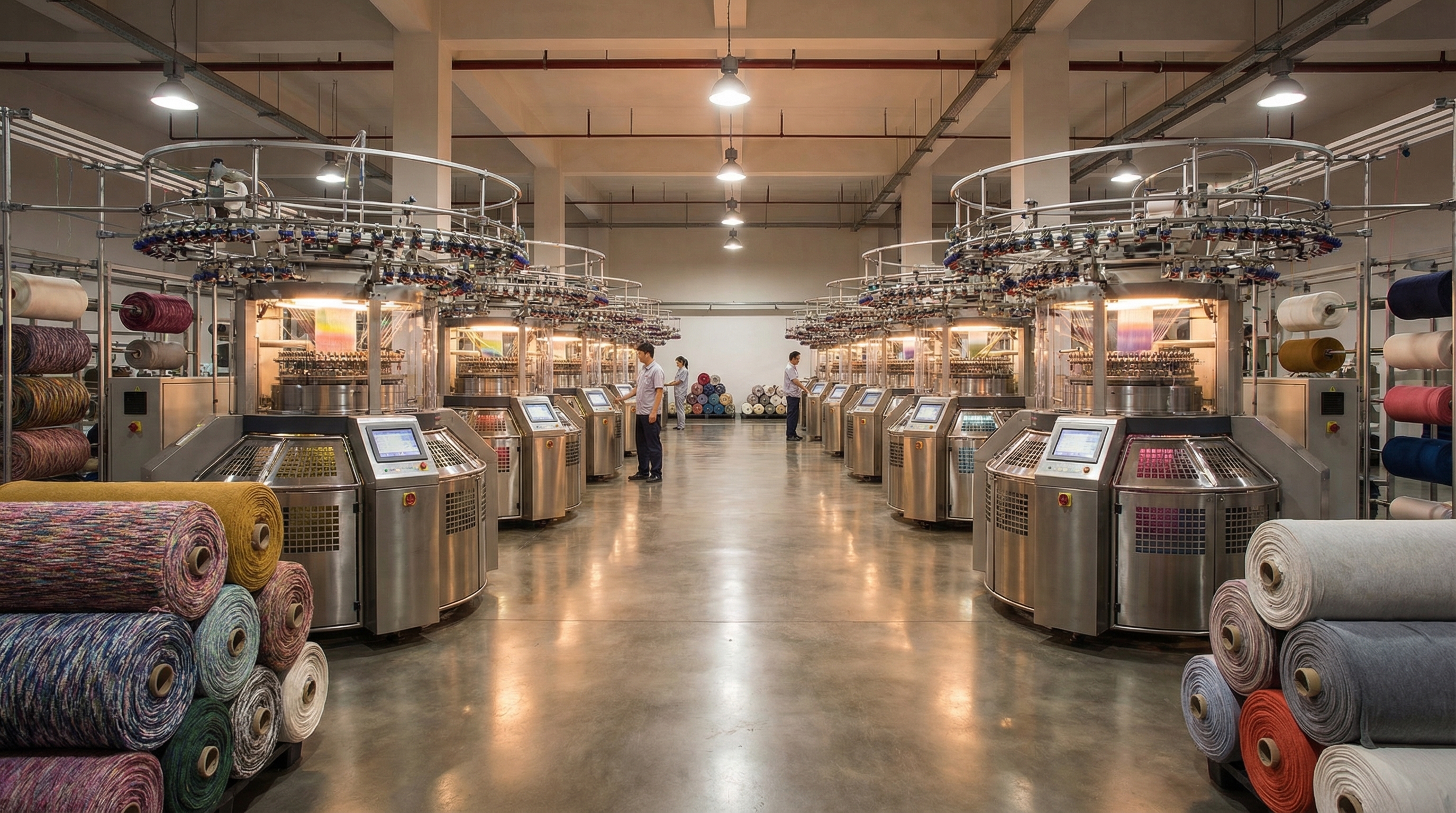
AI will not change fabric sourcing only by adding another forecasting dashboard. The stronger 2026 shift is from AI-enabled tools to AI-first supply chains, where design, sampling, supplier screening, production planning, inventory, and replenishment are connected by the same decision layer.

For fabric suppliers, this changes what buyers will ask for. They will still ask about stock, price, and lead time, but they will also ask whether product data is complete, whether responses are structured, and whether the supplier can fit into a more digital development process.
AI Will First Reshape Forecasting and Inventory HHH
Fashion’s long-standing problem is forecast error: strong styles run out too early, slow styles create dead stock, and sourcing teams react after the season has already moved. AI can combine sales data, social signals, weather, regional preference, and replenishment history to help brands decide which fabrics to develop, how much to buy, and when to reorder.
Some AI tools already report 25% to 35% reductions in excess inventory and procurement cycle reductions of around 40%. For fabric suppliers, that means more frequent small trial orders, faster replenishment decisions, and less patience for vague product information.
Digital Sampling Will Reduce Wasteful Physical Sampling
3D assets, fabric simulation, and AI design tools will allow brands to screen more options before cutting physical samples. They will not replace hand feel, drape, shrinkage, and wearing tests, but they can remove many early direction mistakes.
Suppliers should prepare data that can be used before the first physical sample:
- High-resolution fabric images and texture files
- Composition, weight, width, stretch, and shrinkage data
- Regular color options and dyeable ranges
- Hand feel, drape, and suitable garment categories
- Clear notes on differences between sample yardage and bulk production A supplier that can only send a few blurry photos and say “we can make it” will be harder to include in digital development workflows.
Supplier Discovery Will Depend More on Structured Data
AI procurement tools can screen suppliers by certificates, lead-time reliability, quality history, quotation outliers, and target-market compliance. Relationship-based sourcing will not disappear, but suppliers also need to be findable and understandable by systems.
| AI screening area | What suppliers should prepare |
|---|---|
| Product capability | Fabric type, weight range, composition, structure, function |
| Compliance capability | OEKO-TEX, GRS, GOTS, RCS, and chemical documents |
| Delivery capability | Sampling time, bulk lead time, MOQ, replenishment ability |
| Quality record | Color difference, shrinkage, fastness, inspection process |
| Sustainability data | Recycled content, carbon data, water use, dyeing information |
AI will not create real manufacturing capability for a supplier. It will amplify the visibility of suppliers whose capability is documented clearly.
Procurement Automation Will Compress Communication Time
AI can organize inquiries, generate RFQs, compare quotations, flag risks, track samples, and remind teams about delivery dates. Buyers will spend less time asking repetitive price questions and more time judging whether a supplier is dependable.
That requires suppliers to respond in a more standardized way:
- Quote clearly and include validity dates.
- Mark uncertain fields instead of making soft promises.
- Explain differences between sample and bulk production early.
- Offer alternatives for composition, weight, or process when needed.
- Keep file names and document versions consistent. In an AI-supported procurement environment, messy information becomes a direct execution cost.
Fabric Suppliers Need to Move From Orders to Data Packages
Future buyers will not only request swatches. They will expect a reusable data package that can be read by systems, shared across teams, and reviewed during audits. Suppliers with clean fabric data will be easier to include in AI-first supply chains.
A practical starting point is simple:
- Build a standard fabric specification sheet.
- Photograph core fabrics in a consistent format.
- Organize certificates and test reports by product.
- Track sample versions, color versions, and quotation versions.
- Turn repeated buyer questions into standard response templates. AI will not make sourcing less human. It will make low-quality communication harder to hide. Suppliers who understand fabric and can present data clearly will become easier for buyer systems to recognize.