Fine-count, high-density knits often look more premium, but they also expose more technical risk. The yarn is finer, the structure is tighter, and the internal stress in the fabric is higher. If torque, knitting tension, or finishing balance is not controlled well, the fabric may twist, shrink unevenly, feel harsh after wash, or lose shape in wear. Mechanical balance is the practical framework for keeping those internal forces under control.
In high-density knits, the key is not only finer yarn, but more even stress distribution
The main problem in dense fine-gauge knits is rarely poor raw material. It is usually unbalanced stress inside the structure. As yarn count goes finer and density goes higher, friction, recovery, and loop interaction become more sensitive.
That is why high-density development should not be judged only by count and weight. Stability depends on whether these points work together:
- Balanced yarn twist and torque
- Consistent knitting tension
- A structure that suits compact construction
- Finishing that actually releases internal stress
If one of these layers is weak, the fabric often remains unstable even if the first sample looks attractive.
Mechanical balance can be understood across three levels
In fabric development, mechanical balance is easier to use when it is broken into three practical layers:
| Layer | Main concern | Common failure result |
|---|---|---|
| Yarn level | Torque and retraction control | Spirality and side-seam twist |
| Structure level | Even loop loading | Uneven surface and local stiffness |
| Finishing level | Stable stress release | Wash shrinkage drift and poor size stability |
For fine jersey, compact interlock, performance base layers, and similar programs, all three levels matter at once.
Temperature and humidity shifts expose hidden instability quickly
Many dense fine knits look acceptable in a static sample review, but their weak points appear much faster in use or during transport. “Extreme conditions” do not need to mean aerospace. They often include:
- Hot and humid summer storage or transit
- Dry cold-weather wear
- Repeated washing, tumble drying, or steam pressing
- Continuous body stretch and moisture exposure
When internal tension is uneven, these conditions amplify shrinkage drift, local distortion, loss of recovery, and surface hardening.
The most useful controls usually happen during knitting and setting
When teams find stability problems in fine dense knits, they often begin by changing finishing chemistry. In many cases, the stronger corrections actually happen earlier in the chain.
The most important actions are usually:
- Control yarn torque before the yarn enters a compact structure.
- Reduce knitting-tension variation across the machine.
- Use constructions that can tolerate compact settings instead of forcing overly decorative structures.
- Use setting and preshrink processes to release stress, not only to flatten the face.
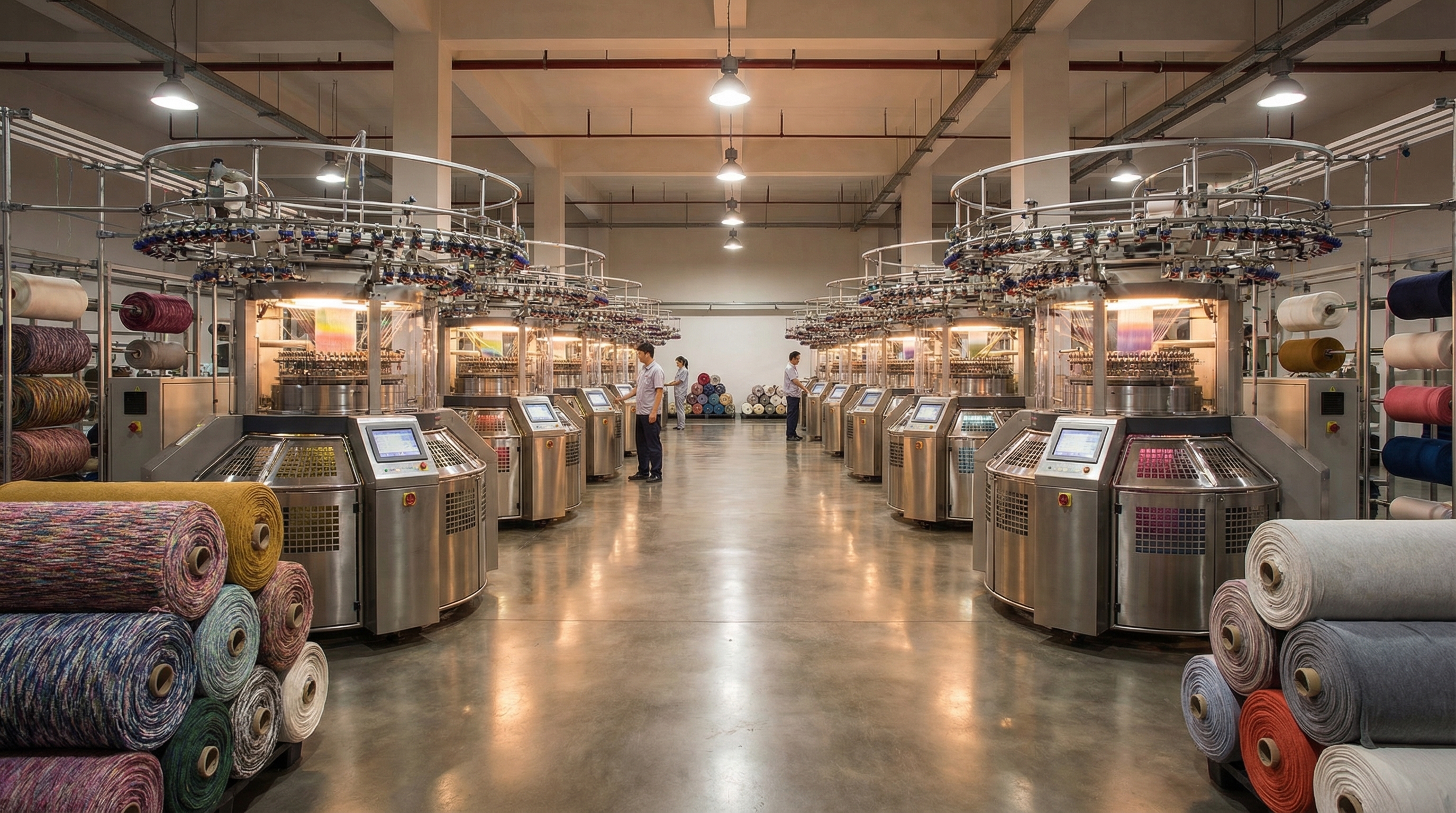
This is one reason dense fine-gauge projects benefit from experienced knitting and finishing teams rather than from sample speed alone.
Sample review should expose stress, not only visual appearance
Many stability risks in fine dense fabrics do not show up in a flat first sample. It helps to add a few simple stress-exposure checks during development:
- Measure weight, width, and shrinkage after wash
- Review hanging recovery and localized stretch recovery
- Compare size behavior before and after steam pressing
- Check whether edge direction or cut panels drift noticeably
These tests are not complicated, but they reveal whether the fabric is mechanically balanced well enough.
Higher density is not always better
One common mistake is pushing density higher simply because a tighter fabric seems more premium. But when density rises faster than yarn behavior, structure, and finishing can support, the result may become hard, over-tight, and poor in recovery.
So “high density” should really mean appropriately compact for the end use, not maximized without limit. That is especially true in travel knits, performance base layers, and next-to-skin styles where mobility still matters.
In premium and performance knits, stability is part of the luxury impression
The premium feeling of a fine high-density knit does not come only from a smoother surface. It also comes from how the fabric behaves over time. End users may never describe that as mechanical balance, but they will feel it immediately when a garment stays straight, keeps its hand, and still looks controlled after repeated wear and care.
That is why mechanical balance matters so much in these programs. Long-lasting refinement is often just another way of describing structural stability done well.