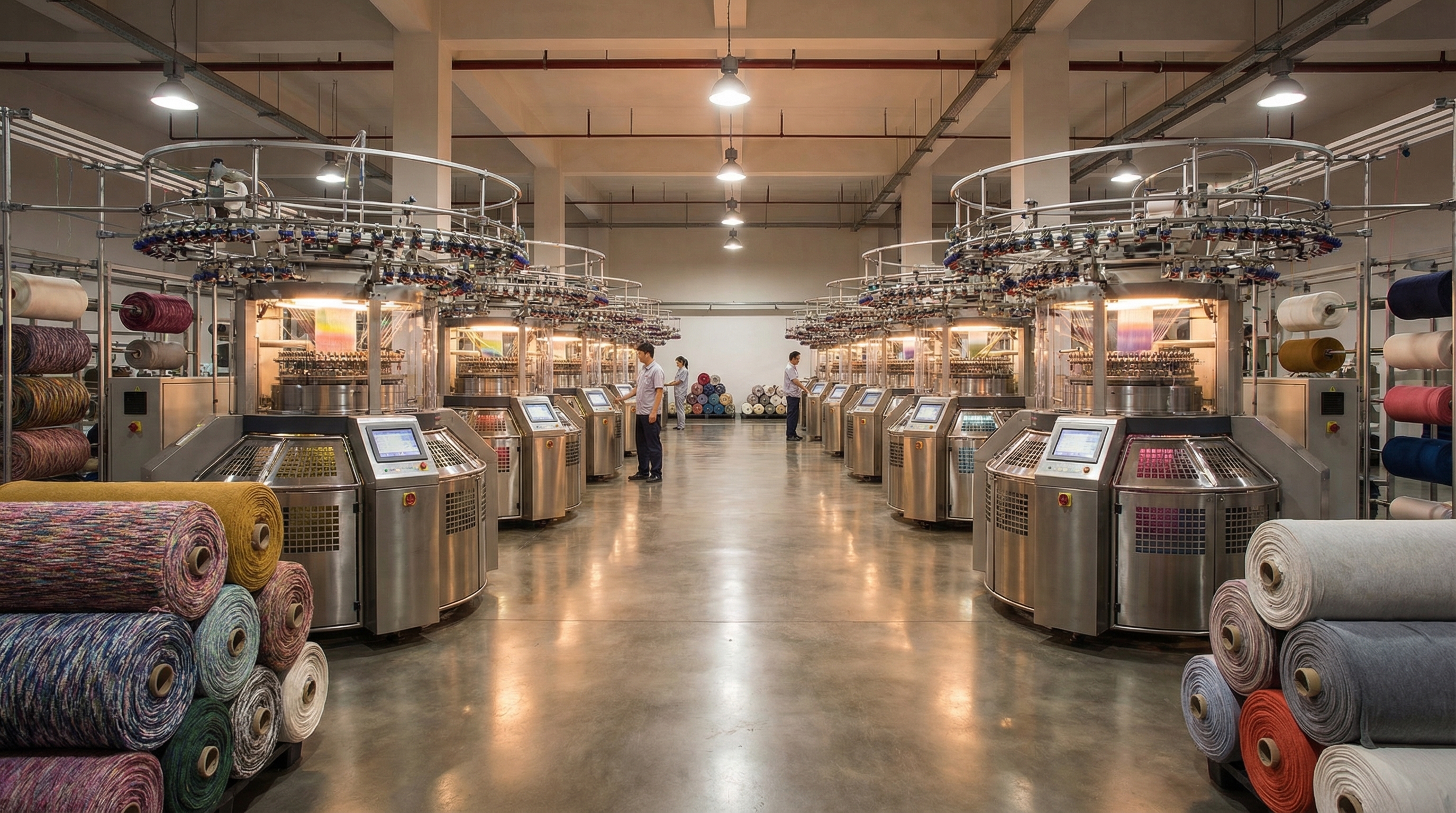
Many people describe the “Guangzhou showroom + Foshan factory” model as a geographic setup, but its real value is operational. It shortens the chain between customer discussion, sample confirmation, production coordination, and shipment planning.
That matters because sourcing cycles usually do not become long because one single step is slow. They become long because the chain contains too much waiting, too much re-confirmation, and too much information loss between steps.
Why Traditional Sourcing Often Drags
In a traditional structure, demand moves through multiple layers:
- the customer speaks with sales
- sales relays the request to traders or mills
- samples come back for another round of clarification
- production and logistics only begin serious alignment later
This creates two common problems:
- information changes as it moves from one layer to the next
- decisions happen sequentially instead of in parallel
So the delay is often not factory speed. It is queue time across the whole chain.
The Showroom Does More Than Display
A good Guangzhou showroom should not only present products. It should function as a front-end decision center. Buyers can compare swatches, adjust direction, and expose practical issues early:
- Is the handfeel correct for the target market?
- Is the color direction already drifting?
- Is the customer prioritizing cost or lead time?
- Should the project switch to a different fabric route now?
If that front-end work happens too far away from the supply chain, the process depends on photos, videos, and repeated explanation. Speed drops immediately.
Foshan Adds Execution Density
The value of Foshan is not simply that factories are there. The value is that manufacturing support is dense enough to keep execution flexible:
- knitting adjustments happen faster
- finishing support is easier to coordinate
- small-batch sample runs are easier to schedule
- inspection, packing, correction, and replenishment can stay local
When front-end judgment and back-end execution stay close enough, the sourcing process becomes more parallel and less linear.
Why the Cycle Can Shrink So Much
The cycle does not shorten because one node suddenly becomes 40% faster. It shortens because many waiting points become smaller at the same time:
- reference sampling moves faster because showroom and factory feedback is closer
- sample approvals move faster because front-end review is clearer
- revisions move faster because problems are exposed earlier
- production planning starts earlier because the factory receives more usable information sooner
- shipment preparation begins earlier instead of waiting until bulk is finished
Once those delays are reduced together, the total cycle can compress significantly.
Which Orders Benefit Most
This model works especially well for three order types:
1. Fast Development Orders
When the brand needs rapid material comparison, color changes, or small trial runs, coordination speed matters more than nominal unit price.
2. Stable Repeat Programs
For long-term repeat orders, the showroom supports communication and selection while the factory supports execution discipline. That is usually more stable than constantly switching suppliers.
3. Urgent Replenishment Orders
When customers suddenly add volume, split shipments, or tighten deadlines, this model makes it easier to re-sequence resources without rebuilding the whole chain.
The Real Lever Is Information Synchronization
Some teams assume that having both a showroom and a factory automatically creates efficiency. It does not. Efficiency depends on whether information stays synchronized:
- does the factory receive the same version the showroom approved?
- are sample revisions documented clearly?
- can customer changes affect scheduling quickly?
- is shipment planning involved early enough?
If the process still depends on scattered chat messages and verbal updates, the model loses much of its advantage.
It Also Reduces Hidden Costs
Shorter lead time is the visible result, but other costs also fall:
- repeated communication cost
- resampling caused by interpretation mistakes
- idle production windows created by delayed approvals
- emergency freight caused by late correction
- rework and inventory cost caused by slow response
Very often, those hidden costs matter more than the quoted fabric price difference.
A Better Way to Evaluate the Model
If a buyer wants to use this model well, three checks matter:
- Is the showroom only a display point, or can it make real development judgments?
- Does the factory control enough of the supporting processes, or only one isolated step?
- Is there a clear system for version control and information flow between both sides?
If those three points are strong, the “showroom + factory” setup becomes more than a slogan. It becomes a shorter and more resilient sourcing system.
Faster Sourcing Does Not Mean Looser Management
One final point matters: compressing the cycle does not mean relaxing process discipline. It usually requires the opposite:
- specs must be locked earlier
- feedback must be given faster
- version changes must be recorded clearly
- transport structure must be decided sooner
That is the real strength of the Guangzhou showroom plus Foshan factory model. It is not only about speed. It is about reducing detours between market demand and factory action.