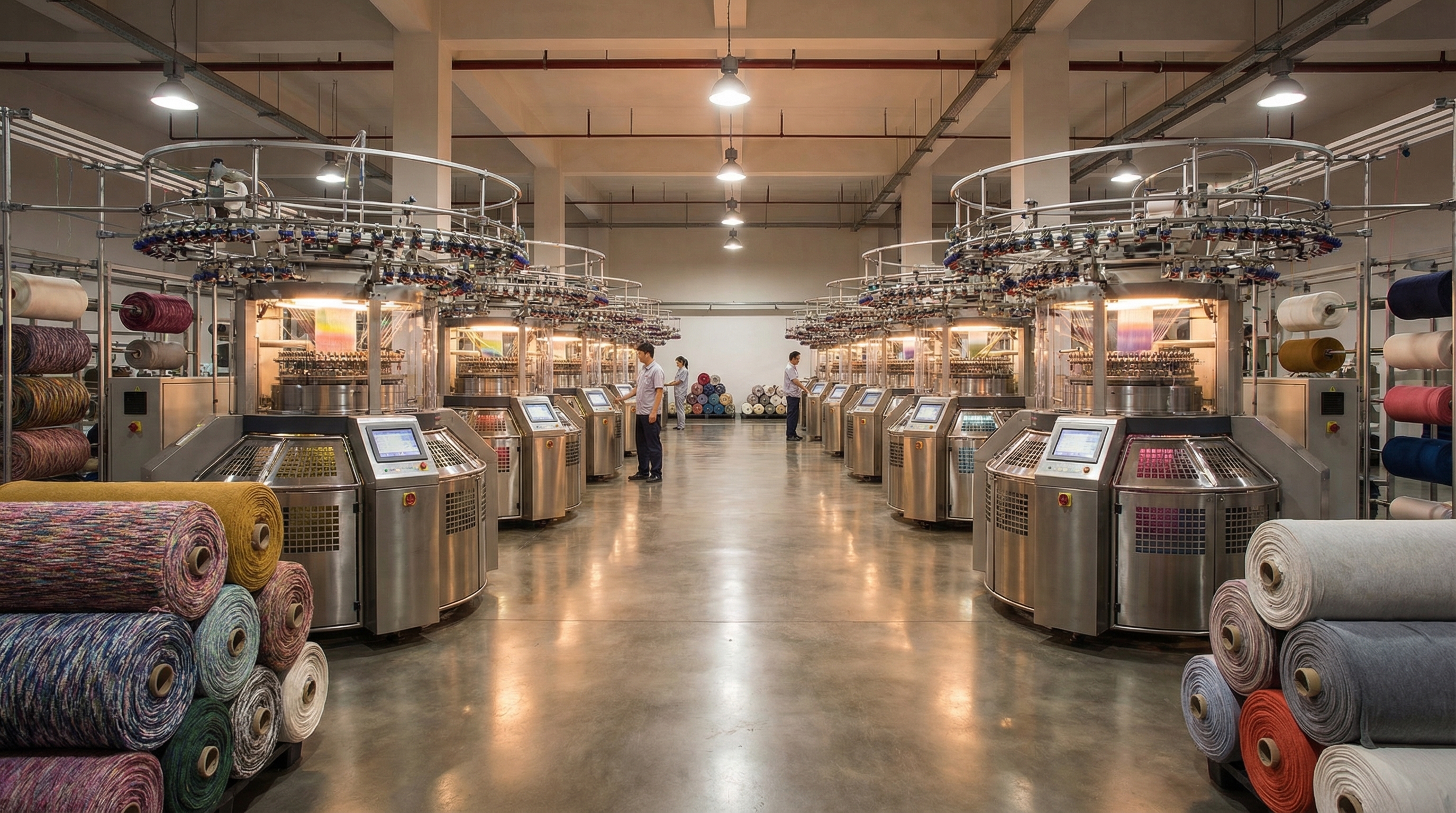
Cotton price forecast and fiber price volatility directly impact knit fabric cost structures. From futures market hedging to alternative fiber options, this guide equips procurement managers with practical strategies to manage cost uncertainty and negotiate better contracts during volatile periods.
Understanding Cotton Price Drivers: Weather, Policy, and Financial Markets
Cotton prices respond to a complex mix of supply-side and demand-side factors. Weather events in major producing regions—India, China, the United States, and Brazil—can slash harvest expectations overnight. The 2020-2022 period saw prices climb from $0.60/lb to $1.20/lb as drought reduced U.S. output while post-pandemic demand recovered faster than supply.
Government policies add another layer. China’s strategic cotton reserves, Indian export restrictions during shortage periods, and U.S. farm subsidies all reshape global supply flows. Currency fluctuations matter too—since cotton trades primarily in USD, a stronger dollar makes purchases more expensive for buyers in Euro, Yen, or emerging market currencies.
Financial market participants, including commodity funds and speculators, amplify price movements. When hedge funds increase long positions in cotton futures, spot prices often follow within days. The correlation between futures market sentiment and physical cotton availability creates volatility that outpaces actual supply-demand shifts.
- Monitor USDA monthly crop reports for harvest forecasts and inventory levels.
- Track futures market open interest and position changes as leading indicators.
- Watch for policy announcements from major producing countries during harvest seasons.
- Consider currency hedging when USD strengthens against your operating currency.
Cotton Price History 2020-2026: Lessons from Recent Volatility
The past six years demonstrate why cotton price forecast accuracy matters for fabric buyers. In 2020, pandemic disruption pushed cotton below $0.55/lb as garment demand collapsed. By early 2022, prices peaked near $1.55/lb—a 180% increase driven by supply chain recovery, drought in Texas, and speculative buying.
The 2022-2023 correction brought prices back to $0.80-0.90/lb as high prices curbed demand and global recession fears emerged. 2024 saw stabilization around $0.85-1.00/lb, though regional variations persisted. The 2025 uptick toward $1.10/lb reflects renewed competition between textile demand and biofuel crop alternatives.
For procurement planning, this history reveals critical patterns: price spikes typically last 6-12 months, corrections can be equally sharp, and the lag between cotton futures and fabric pricing is shortening as mills adopt more responsive hedging strategies.
- 2020: Pandemic low at $0.55/lb followed by gradual recovery.
- 2022: Peak volatility with prices reaching $1.55/lb in May.
- 2023-2024: Correction phase stabilizing $0.80-1.00/lb range.
- 2025-2026: Gradual upward pressure returning toward $1.10-1.20/lb.
Cost Breakdown: From Cotton to Finished Knit Fabric
Understanding where costs accumulate helps buyers negotiate from an informed position. In typical knit fabric production, raw cotton accounts for 60-70% of total fabric cost when cotton prices are stable at $0.80-1.00/lb. This percentage climbs to 75% or higher during price spikes, squeezing margins throughout the supply chain.
The transformation from cotton boll to finished fabric involves multiple cost layers: ginning and cleaning (3-5% of total cost), yarn spinning (15-20%), knitting or weaving (8-12%), dyeing and finishing (12-18%), and quality control/packaging (3-5%). Energy costs, particularly for dyeing and finishing, have grown from 5% to 8-10% of total costs since 2022 due to global energy price increases.
Labor costs vary dramatically by region. Chinese knitting operations run $3-5 per hour all-in, while comparable Vietnamese facilities cost $2-3, and Bangladesh closer to $1.50. These differences explain why the same cotton input can produce fabrics with 15-25% cost variations depending on manufacturing location.
- Raw cotton: 60-70% of fabric cost (varies with market price).
- Yarn spinning: 15-20% including labor, energy, and equipment depreciation.
- Knitting/weaving: 8-12% depending on gauge complexity and machine efficiency.
- Dyeing and finishing: 12-18% with energy representing growing share.
- Logistics and overhead: 8-12% including quality control and packaging.
Futures Market Impact: How Hedging Transfers Risk
The cotton futures market—traded primarily on ICE (Intercontinental Exchange)—serves two functions for fabric buyers: price discovery and risk transfer. Futures prices reflect collective expectations about future cotton availability, often moving 2-4 weeks ahead of physical spot markets. When futures show sustained upward trends, mills typically shorten quotation validity from 30 days to 7-14 days.
For buyers, understanding basis relationships is crucial. The basis (difference between local cash price and futures price) varies by origin quality and logistics. During the 2022 spike, U.S. basis widened to $0.15-0.20/lb above futures as tight supplies created delivery uncertainty. Brazilian cotton, with different quality characteristics, traded at varying differentials.
Mills use futures for hedging in several ways: forward contracting with growers (locking in supply at set prices), inventory valuation protection, and output price stabilization. When mills are well-hedged, they can offer longer price validity. When exposed, they push volatility downstream through shorter quotes and material surcharge clauses.
- Monitor ICE Cotton No. 2 futures as leading price indicator.
- Understand basis risk—cash prices diverge from futures during stress periods.
- Ask suppliers about their hedging coverage and inventory valuation methods.
- Consider calendar spread strategies if managing multi-quarter programs.
Blend Economics: Calculating Cost Impact of Cotton Substitution
When cotton prices spike, blend ratios become powerful cost management tools. Consider a standard 180gsm single jersey fabric: at $1.00/lb cotton, pure cotton costs approximately $2.80/kg fabric. Switching to 60% cotton / 40% polyester reduces cotton content while maintaining acceptable handfeel for many applications.
At current pricing (cotton $1.00/lb, polyester $0.75/lb), a 60/40 blend costs approximately $2.45/kg—a 12.5% reduction. A 50/50 blend drops further to $2.30/kg, saving 18%. However, these calculations assume polyester prices remain stable, which is not guaranteed given oil price volatility and capacity constraints.
The cost equation changes with cotton price levels. At $1.30/lb cotton, the 60/40 blend saves 18% versus pure cotton. At $0.70/lb cotton, the savings shrink to 8%, potentially insufficient to justify the handfeel tradeoff. Buyers should establish trigger points for blend reviews based on cotton price forecast scenarios.
- Pure cotton (180gsm): ~$2.80/kg at $1.00/lb cotton price.
- 60/40 cotton/polyester blend: ~$2.45/kg (12.5% savings).
- 50/50 cotton/polyester blend: ~$2.30/kg (18% savings).
- CVC (chief value cotton, 60/40): Popular balance of cost and quality.
- Review blend economics monthly when cotton volatility exceeds ±10%.
Hedging Strategies for Knit Fabric Buyers
Price locking represents the most direct hedging strategy for buyers with predictable volume needs. By committing to fixed-price contracts for 3-6 month periods, buyers transfer price volatility risk to suppliers or mills who have access to futures hedging. The tradeoff is reduced flexibility—locked prices apply regardless of whether spot markets later decline.
Progressive hedging involves layering in price protection over time. Rather than locking 100% of anticipated volume at once, buyers might secure 25% each month, averaging their effective cotton cost. This strategy works well when buyers expect continued volatility but cannot predict direction. It sacrifices some upside protection but limits downside risk if prices move against locked positions.
Call options on cotton futures—though requiring commodity trading accounts—offer asymmetric protection. Buyers pay a premium (typically 3-5% of underlying value) for the right to purchase cotton at set prices. If prices rise above the strike, the option provides savings. If prices fall, buyers simply let options expire and buy at market rates.
- Fixed-price contracts: Best for predictable volumes, 3-6 month horizons.
- Collar strategies: Combine buying calls and selling puts to reduce net premium.
- Supplier hedging verification: Confirm mills are actually hedging, not just price-taking.
- Index-based pricing: Tie fabric costs to published cotton indices with agreed markups.
Alternative Fiber Options: Polyester, Modal, and Sustainable Alternatives
When cotton price forecast shows sustained elevation, alternative fibers offer both cost stability and supply security. Polyester remains the dominant cotton substitute, currently trading at $0.70-0.80/lb versus cotton’s $1.00-1.20/lb. Its price follows oil markets rather than agricultural cycles, creating diversification benefits.
Modal and lyocell (Tencel) occupy the premium substitution space. At $1.80-2.20/lb, these cellulosic fibers cost more than cotton but offer superior softness, drape, and moisture management. For brands positioned above mass market, modal blends can justify price premiums while reducing cotton exposure. Lyocell’s closed-loop production also supports sustainability claims.
Emerging alternatives include recycled polyester (rPET) at $0.90-1.10/lb, bamboo viscose at $1.40-1.60/lb, and hemp blends at $1.20-1.50/lb. Each brings different handfeel characteristics, dyeing responses, and supply availability constraints. Buyers should trial these alternatives during stable periods, not during urgent cost-cutting scenarios.
- Polyester: Cost-stable at $0.70-0.80/lb, oil-linked rather than agriculture-linked.
- Modal/Lyocell: Premium feel at $1.80-2.20/lb, strong sustainability story.
- Recycled polyester: $0.90-1.10/lb with growing availability and certification options.
- Bamboo viscose: $1.40-1.60/lb, soft handfeel but variable supply consistency.
- Hemp blends: $1.20-1.50/lb, durable but requires sourcing expertise.
Contract Negotiation During Price Volatility
Standard fabric contracts break down during volatile periods. Fixed pricing for 90 days becomes unsustainable for suppliers when cotton moves 20% in a month. Successful negotiation creates frameworks that share risk fairly while maintaining supply relationships. The key is designing trigger mechanisms, not just fixed numbers.
Price adjustment clauses should specify clear thresholds—typically ±7-10% cotton price movement—and adjustment timing (monthly, quarterly). These protect suppliers from catastrophic losses while giving buyers transparency. Index-based pricing, where fabric cost equals cotton index plus fixed processing margin, transfers commodity risk to buyers but eliminates negotiation friction.
Volume flexibility terms matter when market conditions change rapidly. Buyers need protection for order reductions if end-demand softens. Suppliers need commitment for minimum volumes if they’ve hedged or stocked inventory. Splitting programs into ‘firm’ and ‘flexible’ portions—with different pricing—accommodates both needs.
- Set price adjustment triggers at ±7-10% cotton price movement.
- Define adjustment frequency: monthly for volatile periods, quarterly for stability.
- Include index-based options: A-Index, Cotlook, or regional spot references.
- Split commitments: Firm base volumes with flexibility for upside/downside.
- Establish dispute resolution: Third-party index verification prevents argument.
Practical Response Framework for Procurement Teams
When cotton price volatility intensifies, procurement teams need structured response protocols. The first step is market monitoring: designate a team member to track ICE futures, USDA reports, and major weather events. Weekly briefings during volatile periods replace monthly reviews.
Second, segment your fabric portfolio. Core programs with predictable volumes deserve price locking or fixed-term contracts despite the premium. Trend-responsive or test programs benefit from shorter commitments and blend flexibility. Reserve pure cotton for items where it’s essential; default to blends for cost-sensitive categories.
Third, deepen supplier conversations. Mills with strong hedging programs can offer longer price validity. Those exposed to spot markets push volatility downstream. Understanding a supplier’s risk management sophistication is as important as their knitting capability. The best partners explain their cost structure transparently and propose solutions, not just updated quotes.
- Establish cotton price monitoring: ICE futures, USDA reports, weather tracking.
- Segment strategy: Lock core programs, stay flexible on trend/test items.
- Default to blends: Reserve pure cotton for categories where it’s essential.
- Evaluate supplier hedging: Mills with futures access offer more stable pricing.
- Create decision triggers: Pre-agreed cotton price levels that activate blend reviews.