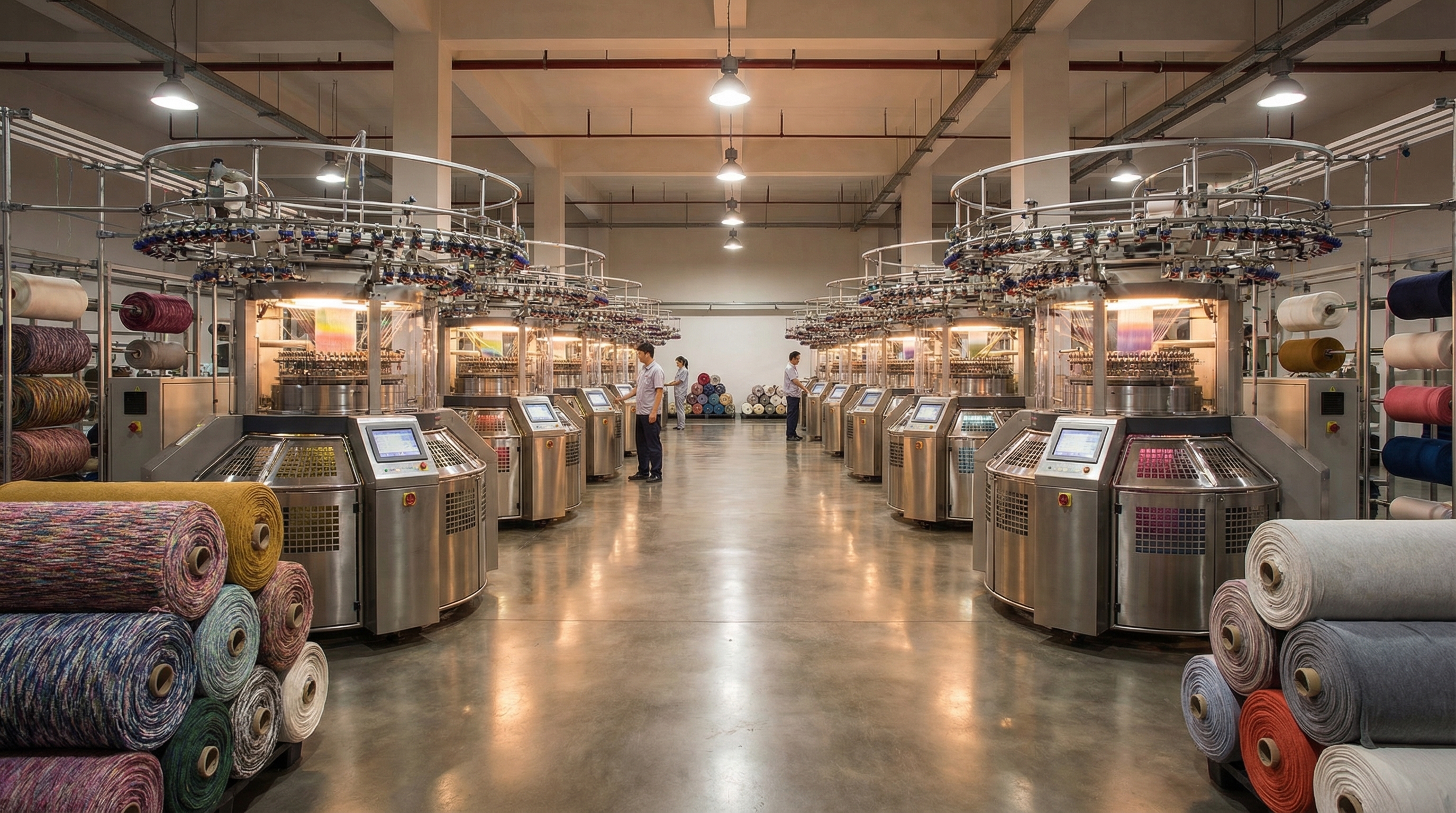
Over the next decade, textile supply chains will be reshaped less by slogans and more by execution pressure. AI, traceability, compliance, and material planning are starting to converge, and buyers will increasingly favor mills that can manage all four together.
AI Is Becoming an Operations Tool, Not Just a Design Tool
In textile sourcing, AI is often discussed as a trend headline, but the more valuable use is operational. Mills and trading teams are starting to use AI for demand forecasting, image-based style matching, internal search, and documentation support.
For buyers, the benefit is not novelty. The benefit is faster decision support when comparing fabric options, color routes, finishing risks, and sampling priorities. Leading mills using TrusTrace and similar platforms report 40-60% reduction in sample matching time.
AI textile sourcing tools now integrate directly with ERP systems, enabling real-time visibility across yarn procurement, production scheduling, and quality checkpoints. This integration eliminates the information silos that traditionally delayed decision-making.
- Demand forecasting AI predicts greige fabric needs 3-6 months ahead based on historical patterns and market signals
- Image recognition enables instant matching of fabric samples against internal databases with 95%+ accuracy
- Natural language processing automates documentation review for compliance and customs clearance
- Machine learning models flag color deviations and lab-dip exceptions before they become bulk issues
- Predictive analytics identify optimal yarn sourcing windows based on cotton futures and freight rates
- AI-powered chatbots handle routine buyer inquiries, reducing response time from hours to minutes
AI Applications in Fabric Sourcing: From Concept to Execution
Beyond general productivity claims, AI textile sourcing delivers measurable value in specific workflows. Yarn-to-fabric matching algorithms can now analyze thousands of construction combinations in seconds, identifying optimal blends for target performance specifications without physical sampling.
Color management represents another breakthrough area. AI systems trained on spectral data can predict dye recipes with 90%+ accuracy on first attempt, reducing lab-dip cycles from 3-4 rounds to 1-2 rounds. This alone can compress development timelines by 2-3 weeks.
Quality prediction models analyze knitting parameters, yarn characteristics, and environmental conditions to forecast fabric performance before production begins. Early adopters report 25-30% reduction in quality claims and returns.
- TextileGenesis™ AI fabric matching reduces physical sample requirements by 60% through digital twin technology
- TrusTrace sustainability scoring uses AI to assess supplier compliance across 200+ ESG criteria automatically
- Computer vision inspection detects fabric defects with 98% accuracy, surpassing human inspection rates
- Predictive maintenance AI monitors knitting equipment to prevent downtime and quality drift
- Supply chain optimization algorithms balance inventory, lead time, and cost across multi-tier networks
- Sustainable fabric sourcing AI evaluates material options against carbon footprint, water usage, and chemical impact
Sustainability Pressure Is Moving Upstream
More apparel buyers now ask for clearer material origin, safer chemistry, and a better explanation of how a fabric is dyed and finished. That means the supplier conversation can no longer stop at price and lead time.
If a supplier cannot explain what happens between greige knitting and finished rolls, sustainability remains a marketing claim instead of a sourcing advantage. The shift from greenwashing to verifiable sustainability is accelerating across all market tiers.
Brand compliance teams now conduct deeper supply chain audits, tracing materials back to fiber origin. This upstream pressure forces mills to document every transformation stage, from yarn spinning through dyeing, finishing, and packaging.
- Ask what certifications are actually active, not just familiar logos.
- Confirm whether traceability sits with the mill or is outsourced across multiple parties.
- Check if quality records and compliance records are managed together.
- Verify chemical management systems align with ZDHC MRSL (Manufacturing Restricted Substances List)
- Request water and energy consumption data per meter of fabric produced
- Assess waste management practices including recycling rates and chemical disposal methods
Blockchain Traceability in Practice: Real-World Implementation
Blockchain technology has moved beyond pilot projects into operational deployment across major textile supply chains. TextileGenesis™ leads implementation with its fiber-to-retail traceability platform, creating immutable digital records of every supply chain transaction.
The technology works by assigning unique digital tokens to fiber batches, tracking them through each manufacturing stage. At dyeing, finishing, and cutting, participants scan and verify materials, building an unbroken chain of custody from cotton farm to finished garment.
Major brands now require blockchain traceability for premium sustainable collections. The transparency builds consumer trust while enabling rapid investigation of any compliance issues. Suppliers with blockchain-ready systems gain preferred status in brand vendor rankings.
- TextileGenesis™ tracks 50+ fiber types across 8,000+ supplier locations in 70+ countries
- Blockchain records create tamper-proof audit trails that satisfy brand compliance requirements
- Smart contracts automatically trigger payments when verified production milestones complete
- Real-time dashboards provide buyers visibility into production status without manual reporting
- Integration with certification bodies enables automatic validation of GOTS, OEKO-TEX claims
- QR code consumer scanning shows complete product journey from raw material to retail
Sustainability Certifications Guide: What Buyers Need to Know
Understanding textile certifications separates meaningful sustainability from marketing claims. GOTS (Global Organic Textile Standard) remains the most comprehensive certification, covering fiber production through finished product environmental and social criteria.
OEKO-TEX Standard 100 focuses on consumer safety, testing for harmful substances in the final product. OEKO-TEX MADE IN GREEN adds production facility assessments and supply chain traceability, providing broader assurance than Standard 100 alone.
BCI (Better Cotton Initiative) promotes more sustainable cotton farming practices, though it does not certify organic status. ZDHC (Zero Discharge of Hazardous Chemicals) addresses manufacturing chemistry, with MRSL conformance becoming a baseline requirement for major brands.
- GOTS: Requires 70%+ organic fiber, covers environmental and social criteria throughout supply chain
- OEKO-TEX Standard 100: Tests for 300+ harmful substances; classes I-IV based on product use (baby to decorative)
- OEKO-TEX MADE IN GREEN: Adds facility audits and supply chain transparency to Standard 100
- BCI: Focuses on water efficiency, pesticide reduction, and farmer livelihood improvement
- ZDHC MRSL: Restricts hazardous chemicals in manufacturing; levels 1-3 indicate conformance depth
- Higg Index: Self-assessment tools for environmental and social impacts across production stages
- Cradle to Cradle: Evaluates material health, recyclability, renewable energy, and social fairness
Regulatory Landscape 2026-2030: Preparing for Compliance Evolution
The regulatory environment for textiles is intensifying rapidly. The EU Green Deal’s Sustainable Products Initiative will require digital product passports containing detailed lifecycle data for all textiles sold in the EU by 2030.
Extended Producer Responsibility (EPR) schemes are expanding globally, making brands financially responsible for end-of-life textile management. France already mandates EPR, with Germany, Netherlands, and others following by 2025-2027.
Chemical regulations continue tightening. The EU’s REACH regulation adds new restricted substances regularly, while California’s Proposition 65 and similar state-level laws create complex compliance mosaics in the US market.
- EU Digital Product Passport: Will require traceability data, environmental footprints, and repair information by 2030
- Green Claims Directive: Prohibits generic environmental claims without substantiation; targets greenwashing
- EPR Schemes: Brands must fund textile collection, sorting, and recycling infrastructure
- Microplastic Regulations: France bans synthetic fiber filters below certain micron ratings from 2025
- Due Diligence Laws: Germany’s Supply Chain Act and EU CSDDD require human rights and environmental risk assessment
- Carbon Border Adjustment: EU CBAD will impose carbon costs on imports from non-EU countries by 2026
- US State Laws: California, New York, and others implementing textile-specific waste and chemical regulations
What Buyers Should Look For
The strongest partners are usually not the ones using the most software. They are the ones using systems to reduce rework, improve communication, and make quality decisions earlier.
For knit programs, a vertically coordinated supplier has a structural advantage because yarn selection, knitting tension, dyeing response, and finishing handle all affect the final commercial result. The best suppliers integrate these variables into unified quality planning.
Look for evidence of continuous improvement programs. Mills investing in AI textile sourcing, sustainable fabric development, and traceability infrastructure today will be the category leaders of 2030. Early partnership with such suppliers secures capacity and preferential treatment as demand for verified sustainable production grows.
- Technology integration: Systems connecting design, sampling, production, and logistics in unified workflows
- Data transparency: Willingness to share real-time production data and quality metrics
- Certification portfolio: Multiple active certifications demonstrating comprehensive commitment
- Innovation investment: R&D spending on sustainable materials, process efficiency, and digital tools
- Risk management: Diversified sourcing, backup capacity, and contingency planning capabilities
- Communication discipline: Structured reporting, proactive issue escalation, and clear accountability
Automation Matters Most Where Rework Used to Hide
The most practical AI applications in textiles are often tied to repeat work that used to depend on memory, spreadsheets, and manual follow-up. Forecasting greige demand, matching old fabric references, checking document consistency, and flagging lab-dip exceptions are all high-value areas because they reduce delay without changing the customer’s product target.
That is why buyers should ask less about whether a mill ‘uses AI’ and more about where it reduces sampling cycles, internal search time, and communication errors. A supplier that can answer those questions usually has a more mature operating model than one that only talks about digital transformation in broad terms.
The ROI of AI textile sourcing tools becomes clear when measuring time-to-market compression. Mills eliminating one week from the average 8-week sampling cycle gain significant competitive advantage, especially for fast-fashion and trend-responsive programs.
- Greige forecasting: AI analyzes order patterns to optimize yarn procurement and knitting schedules
- Sample matching: Image recognition finds historical fabric matches, eliminating redundant development
- Document automation: AI extracts and validates data from certificates, invoices, and shipping documents
- Exception management: Machine learning flags deviations from quality norms for immediate attention
- Communication optimization: Automated status updates reduce manual reporting burden and error rates
- Inventory optimization: Predictive models balance stock levels against demand volatility and lead times
Traceability Will Shift from Bonus to Entry Requirement
Traceability is becoming harder to separate from commercial viability. Brand teams increasingly want origin logic, chemistry control, and audit-ready records to sit alongside normal quality paperwork, especially when the fabric goes into regulated export programs or sustainability-led collections.
For buyers, the implication is clear: future-ready suppliers will not only provide certificates, but also explain how yarn source, dyeing route, finishing chemistry, and shipment records connect. That level of process visibility is what turns sustainability from a presentation slide into something operationally usable.
The convergence of AI textile sourcing, blockchain traceability, and certification management creates a new baseline for supplier qualification. Mills unable to demonstrate digital supply chain transparency will find themselves excluded from brand vendor lists by 2027-2028 as compliance requirements harden.
- End-to-end mapping: Documenting every transformation from fiber to finished fabric
- Chemical transparency: Disclosing all substances used in dyeing and finishing processes
- Audit readiness: Maintaining records that satisfy third-party compliance verification
- Blockchain integration: Leveraging platforms like TextileGenesis for immutable traceability
- Certification linking: Connecting specific production batches to relevant GOTS, OEKO-TEX certificates
- Carbon accounting: Tracking and reporting emissions across the manufacturing process
- Social compliance: Documenting labor practices and facility conditions throughout supply chain